
Misting fans are designed to cool outdoor spaces during hot weather. They combine airflow with a fine water mist to lower the surrounding air temperature. This makes them useful for patios, restaurants, events, and outdoor work areas.
Misting fans are designed to cool outdoor spaces during hot weather. They combine airflow with a fine water mist to lower the surrounding air temperature. This makes them useful for patios, restaurants, events, and outdoor work areas.
Most misting fans are used in warm, dry climates where evaporation happens quickly. They are commonly found at outdoor dining areas, resorts, backyards, sports venues, and large events. Some misting fans are also used indoors for industrial and commercial spaces with high heat levels.
This guide explains how misting fans work, their benefits, the different types available, and common questions people ask before choosing one.
If you have an questions about misting fans, outdoor cooling for our Luxmist Phoenix patio enclosure supplier, be sure to reach out to us. Or our Miami air conditioning system supplier page. We’re here for you.
And for those of you who want the science and engineering behind misting fans. We have you covered. At the bottom of this page we get good and wonky. Very technical indeed.
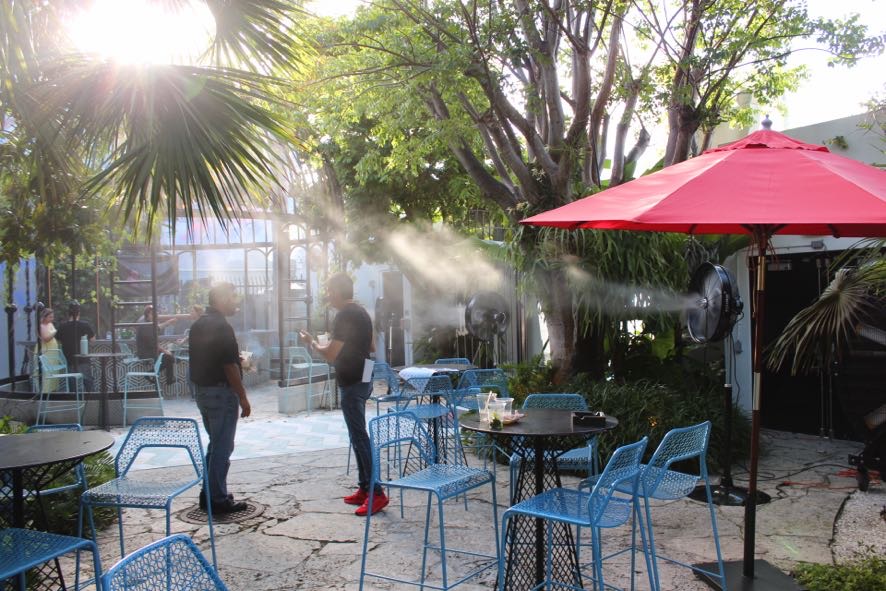
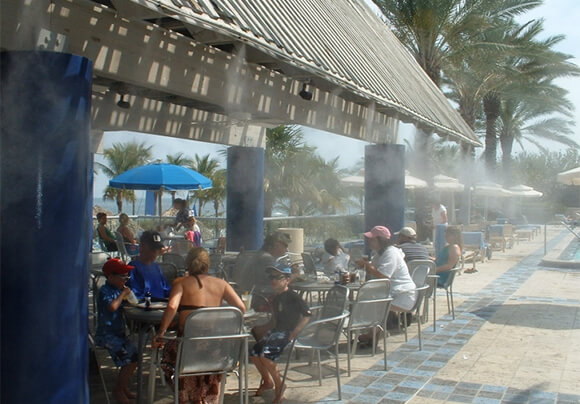
Misting fans provide cooling by releasing a fine mist into the air. As the water evaporates, it absorbs heat from the surrounding environment. This process creates a noticeable drop in temperature without enclosing the space.
Outdoor misting fans are often more energy efficient than traditional air conditioning. They cool people and open areas instead of conditioning entire rooms. This makes them useful for outdoor spaces where air conditioning is not practical.
Misting fans can also improve comfort during extreme heat. They help reduce heat stress at outdoor gatherings, work sites, and public events. In dry climates, the mist evaporates quickly, creating cooling without soaking surfaces.
Misting fans work through evaporation. Tiny droplets of water are released into warm air. As the droplets evaporate, heat is pulled from the air, lowering the temperature.
This cooling effect can reduce the surrounding temperature by several degrees. In hot, dry environments, the process happens quickly and efficiently. The result feels like a steady, refreshing breeze rather than heavy moisture.
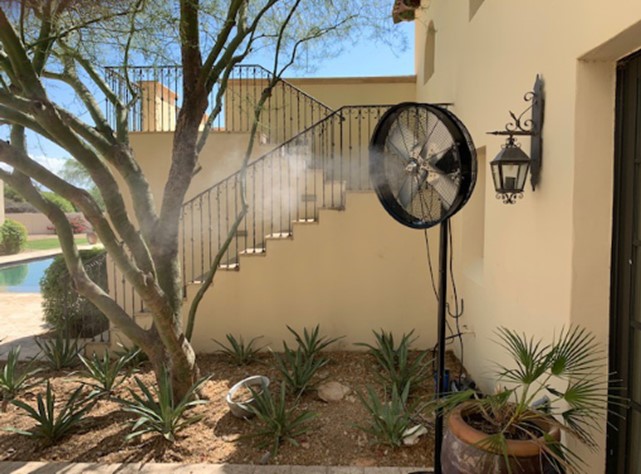
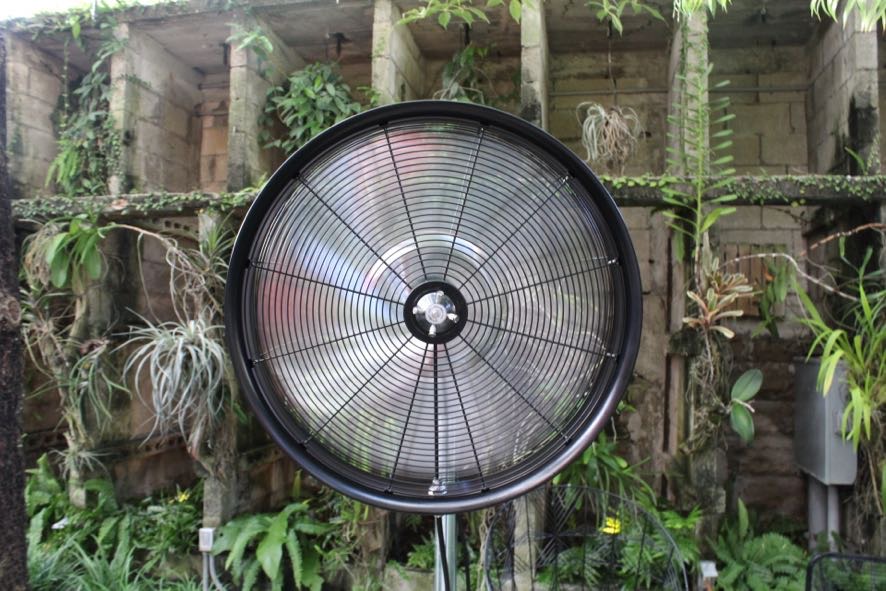
Compared to air conditioning systems, misting fans use less energy. They focus cooling where people are located instead of cooling enclosed spaces. This can lower energy costs, especially during long summer months.
Because they do not rely on refrigerants or compressors, misting fans are simpler systems. Many users choose them as a cost-effective cooling solution for outdoor areas.
There are several types of misting fans designed for different spaces and uses.
Portable misting fans are mobile and easy to reposition. They are commonly used for events, patios, and temporary outdoor setups. These fans are useful when flexibility is needed.
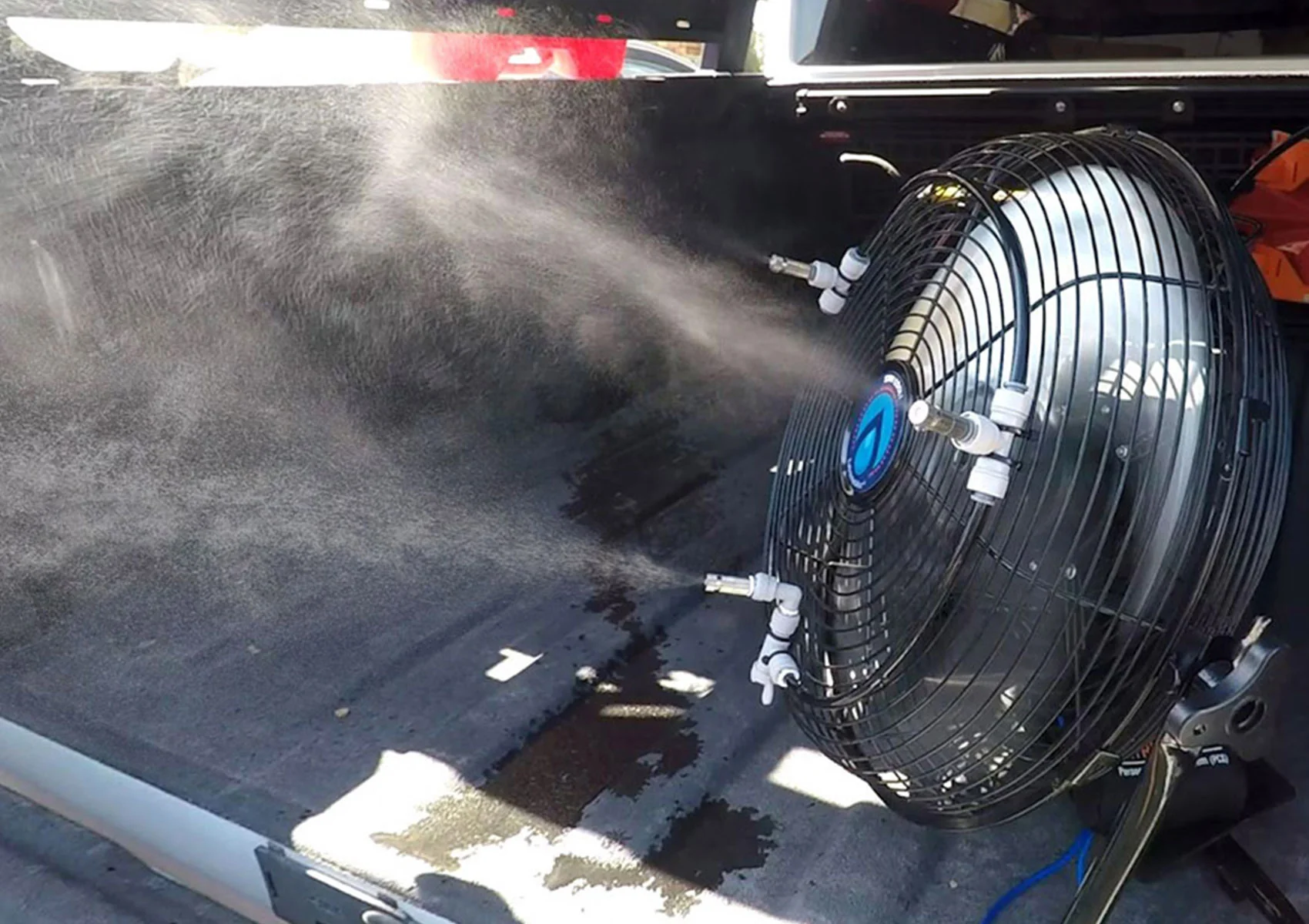
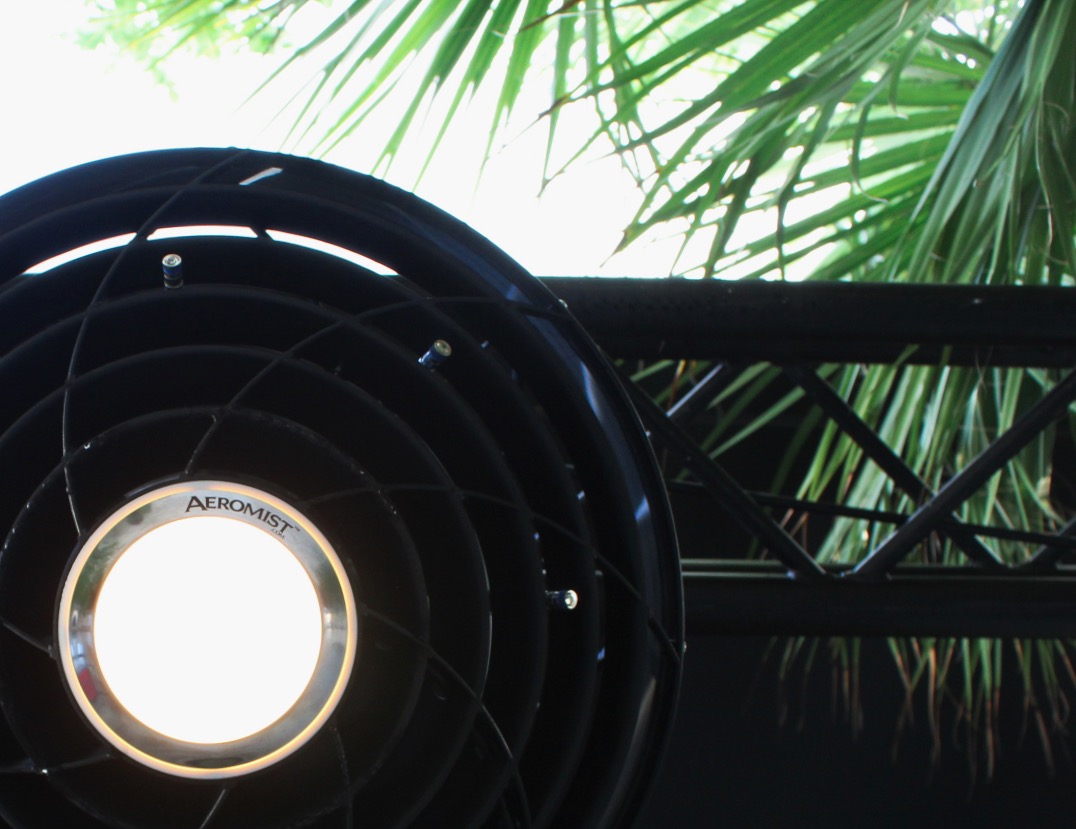
Wall-mounted misting fans are installed in fixed outdoor areas like patios and restaurant seating. They provide consistent airflow without taking up floor space. These fans are often chosen for permanent outdoor cooling.
High-pressure misting fans use powerful pumps to create ultra-fine mist droplets. This allows for faster evaporation and stronger cooling without wetting surfaces. They are often used at large events and commercial spaces.
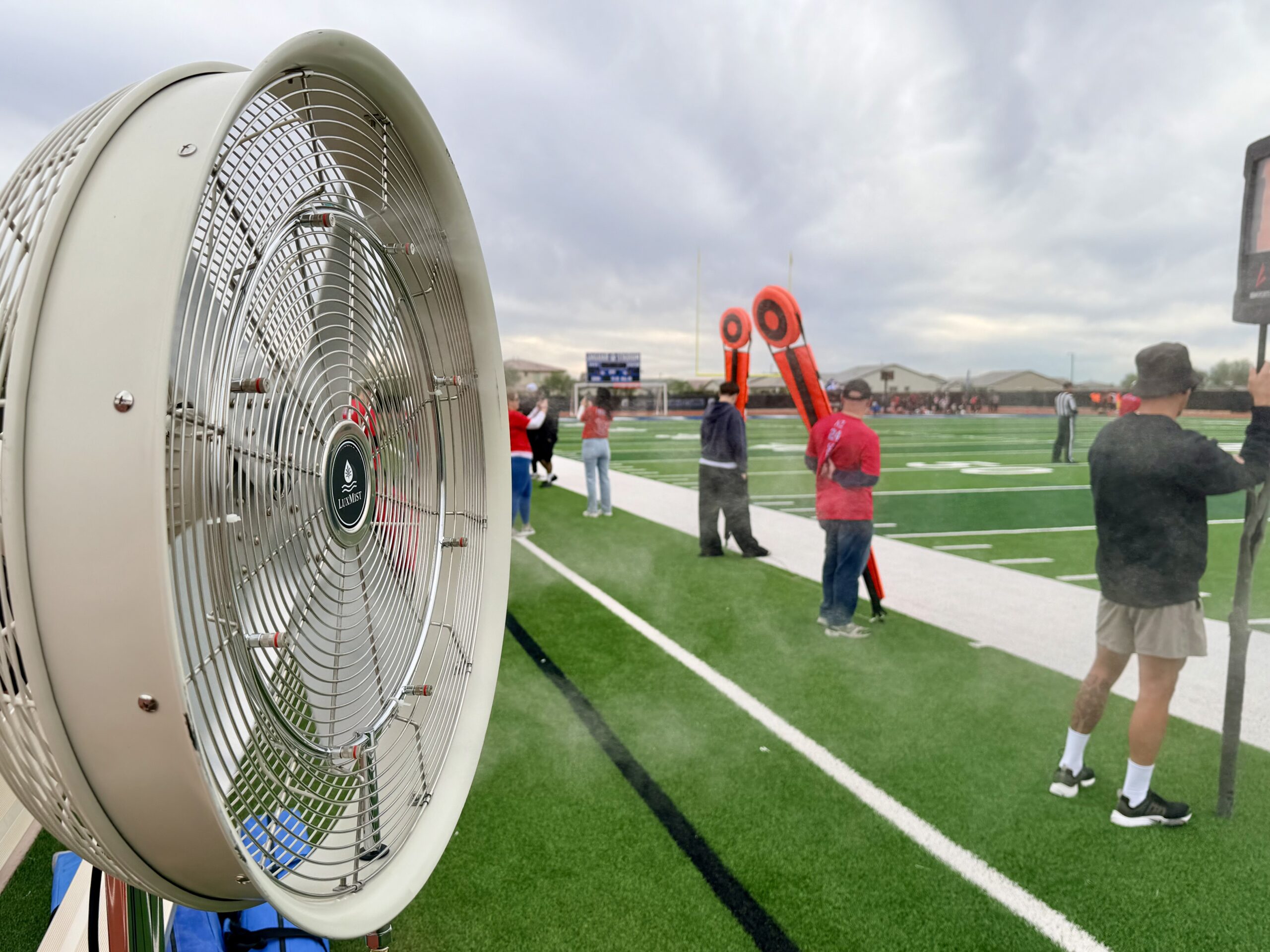
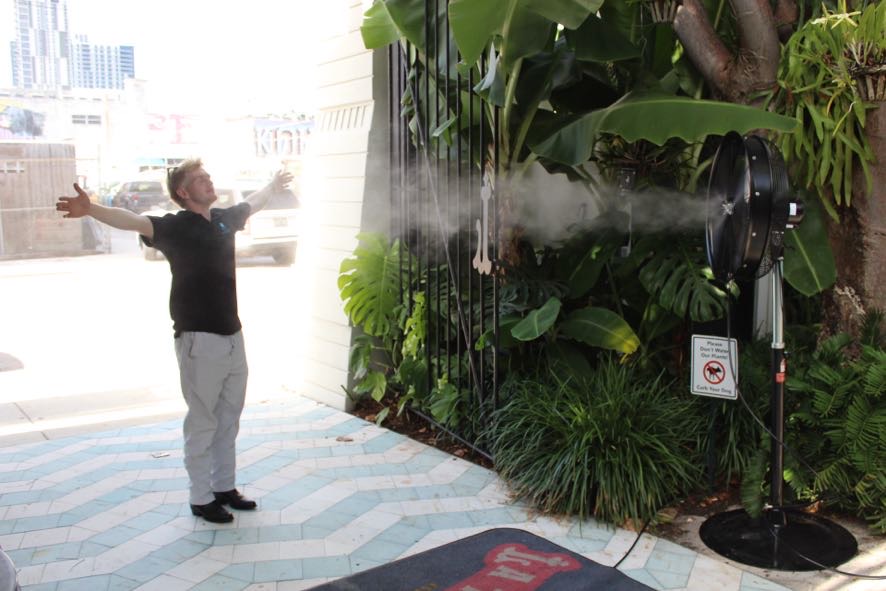
Oscillating fans rotate from side to side, spreading mist across wider areas. They work well in spaces where even coverage is important.
Yes. Misting fans are effective in hot and dry climates. The evaporation process lowers air temperature and improves comfort in open spaces.
No. Air conditioning cools enclosed spaces by removing heat and moisture. Misting fans cool open areas through evaporation and added airflow.
Some misting fans are used in industrial or commercial indoor spaces with high heat. Proper ventilation and drainage are important for indoor use.
When designed correctly, misting fans produce droplets small enough to evaporate quickly. This prevents surfaces from becoming wet.
Misting fans are best for outdoor or open-air spaces. They work especially well in hot, dry climates. Restaurants, homeowners, event planners, and facility managers often choose misting fans to improve comfort without enclosing the space.
They offer a practical way to enjoy outdoor areas longer during warm weather. Not by replacing air conditioning. But by making outdoor cooling possible where traditional systems cannot work.
Contact us to learn more about system options and how they work.
We know that some of you want more depth and understanding. So here you go – the science and engineering of misting fans.
Misting fans cool air through evaporative cooling, a process driven by phase change. Liquid water absorbs latent heat as it transitions into vapor. This heat is pulled from the surrounding air, lowering its temperature without mechanical refrigeration.
The cooling effect depends on airflow, droplet size, and ambient air conditions. Here is more about evaporative cooling systems.
Let’s talk psychrometrics.
The maximum cooling potential of misting fans is governed by the wet bulb temperature. This represents the lowest temperature air can reach through adiabatic evaporation.
Cooling effectiveness increases when the difference between dry bulb and wet bulb temperatures is large. Hot, dry climates provide ideal conditions for misting fan performance.
Droplet size determines whether water evaporates efficiently or causes surface wetting. Smaller droplets provide more surface area per unit mass, accelerating evaporation. Proper atomization allows droplets to remain suspended in airflow long enough to fully evaporate. High-pressure systems are often used to achieve optimal droplet distributions.
Single droplet evaporation is commonly described by the D-squared law. Under stable conditions, droplet diameter decreases linearly with time squared.
Evaporation rate is influenced by air velocity, vapor pressure gradient, and temperature. Increased airflow enhances mass transfer and speeds evaporation.
Misting fans involve simultaneous heat and mass transfer processes. Heat is transferred from air to droplets while vapor diffuses into the air stream.
This interaction lowers air temperature while raising humidity. Effective designs balance these processes to avoid saturation and maintain comfort.
Fans control how long droplets remain in contact with warm air. Longer residence time allows more complete evaporation.
Turbulent airflow enhances mixing and brings fresh dry air into the spray zone. Poor airflow design can reduce cooling or cause fogging.
Surface wetting occurs when evaporation cannot keep pace with droplet delivery. This often results from oversized droplets or high ambient humidity. Proper system design limits water flow relative to airflow.
Controlled mist density ensures evaporation occurs before surface contact.
It’s all about heat transfer during water spray cooling.
Cooling effectiveness is measured by temperature reduction and wet bulb approach. Latent heat removal is calculated using evaporated water mass and vaporization energy.
Electrical efficiency compares cooling output to fan and pump energy use. Optimized systems achieve strong cooling with minimal water waste.
Engineers model misting fans using two-phase flow simulations. Computational fluid dynamics tracks airflow while droplets are modeled as discrete particles. These models predict evaporation, drift, and temperature distribution.
Advanced modeling simulations improve comfort while reducing overspray and inefficiency.
If you have questions about how outdoor misting fans work, we’re happy to help. Our team can explain system types, setup options, and what works best for different spaces. Reach out anytime to get clear, straightforward information.